Radical Translation: which reshapes the book in extreme and revolutionary ways both as a means of interpreting the literature and of making the film a more fully independent work.

Charlie is a freshman in high school struggling to make friends because he is not like the other students in his class. It starts out with Charlie writing to an unknown reader about his life. He remembers how his friend in middle school kills himself. Charlie is a loner. One day he meets a senior named Patrick and his stepsister Sam. Patrick is gay and is secretly dating a football player. Charlie is secretly attractive Sam, but doesn’t act on his feelings. As he becomes friends with them and their friends, his flashbacks of his aunt Helen dying is less. He dates Mary Elizabeth, but doesn’t like her as much as she loves him. During a game of truth or dare, he ruins their relationship by kissing Sam. It causes the group to exclude him and Patrick tells him to stay away. His flashbacks return. During lunch one day, Patrick is attacked by a group of football players all because he talked to his boyfriend who called him horrible names. Charlie saves him by fighting them back. His old friends let him back in the group, and everything goes back to normal. Except all of Charlie’s friends are seniors and the year is coming close to an end. His anxiety rises. Sam gets accepted in her preferred university and Charlie comes over to help her pack. While packing, Charlie tells her that he likes her. Sam is angry that he didn’t say anything. They kiss and she makes a move, but Charlie isn’t ready for that kind of relationship. The next day, Charlie experiences emotions and has flashbacks of his Aunt Helen touching him inappropriately. In the end, it comes out that Charlie was sexually molested him when he was little, but since loved his aunt he didn’t tell. He is admitted into a mental hospital. When he is released, Sam and Charlie visit him. He comes to terms with his past and decides to participate in life instead of writing letters about his life.
When ever I think of horror movies, I think of the generic plot of a teenaged couple making out in a car and then some random convict or scary monster comes out and kills both. Most bad horror movies start out this way, well I'm assuming. I don't like horror movies. I don't like being scared. I personally do not like jump scares and stuff like that. After I watch a horror movie or anything that scary, I go to my mom's room and sleep with her.
But that's just one psychological reaction to horror movies.
Nofilmschool recently made a post about horror films and why we like them. There's so many reasons, but no one knows exactly why we like them. They thought that it stimulates our fear factor of our brain, except it doesn't. It hits up the problem solving parts and other non-fear parts. Also there are many theories for why we like them. I think that the unrealness of horror films also helps. After about six hours of paranoia, I remind myself that the nightmarish horror isn't real. It helps ease the fear. As long
as I know that the demented spirit from TV won't come out of my real TV, then I'll get over it in a month.
I think the scariest horror has the be ones that can happen in real life. That's what some most horror films are based off of, with the mutated monsters and the fear of the atomic age, and the zombies now with the fear of a viral infection. Though those are unrealistic, it's a could be and that's scary.
Google honored Edith Head with a doodle for her birthday. She holds the record for most Oscar wins
by an individual woman. She was a phenomenal costume designer. With Edith Head her costumes inspired a lot of new fashion of the time. When Edith worked with Hitchcock, she came up with perfect costumes for the 'perfect women' to dismantle. She succeeded with this task. She set trends with her signature sraong in Jungle Princess and a strapless evening gown in A Place in the Sun.
Costuming has came a long way. With the technology of our time, we are changing the way costume design has been perceived. Costuming is very important for movies. It sets the mood for the rest of the movie. To be honest, we probably don't care about the people who come up with the costumes that the actors wear. We might not realize it but costumes really make or break a movie. It really comes into play with superhero movies were costumes are stasis. When Man of Steel came out, it really took a toll on faithful Superhero fans as they strayed from the red underpants over the tights look for the similar to Spiderman look in Man of Steel. Fans weren't too happy, but it gave it a more masculine look.
Overall, costuming is important.
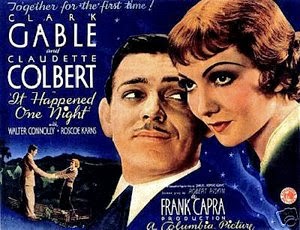
This movie was great a while ago. It might not seem that way now. It's poorly constructed and the editing is insufficient. It's just not like the movies now made in 2013. But if you go back to the time it was produced, it broke down barriers like none of the its competition. It paved ways for others in its genre. It won Oscars and other awards for being so amazing.
I can see it.
Ironically, it happened one night. It Happened One Night is a movie about a young heiress, Ellie, that runs away, or swims away, from her father and then tries to get away to New York City. On the way, she meets a journalist, Peter who was fired from his job and looking for a story to make him famous. That story just happens to be her. Unbeknownst to Ellie, her father has put out an award to whoever finds her and brings her home for her wedding. The heiress and journalist end up falling in love, which isn't a surprise to anyone. Peter realizes that he loves Ellie and goes to get money for the two to run away and get married without telling Ellie. He took the car of the owners of the hotel they're staying at without telling them. The owners are mad and kick Ellie, who was sleeping all this time, out. Mad at Peter, she turns herself in to her father.
The two are depressed being away from each other. Ellie tells her father about Peter and how different he was. He called her a brat and that her father raised Ellie wrong. The father and Peter meet and instead of asking for the reward, Peter only wants the money that he spent on Ellie. Convinced that the two need each other, her father tells Ellie that if she wants to leave her fiancé for Peter, he would support her. During the wedding, Ellie thinks about it and chooses Peter over her fiancé. Like any other romantic comedy, the two meet to get married.
I don't really like romantic comedies, but I was expecting a really elaborate plot that was hard to get into like most movies of the time. I enjoyed it because it went to the point of the plot quickly. The shots were mediocre and had the old time film timey feel to it. Overall it gets a 6.96/10 for me.
The Perks Of Being A Wallflower is a book-to-movie by Stephen Chbosky. The translation to film is excellent because Chbosky was the one who directed it. I feel like any author with the chance of directing their own film should do it. Why? Because they have the vision of what the plot should look like on film. Not saying that all movies directed by someone other than the authors are bad. The Help is a great example of sticking to the book. I read The Help expecting something entirely different, but was pleasantly surprised when the book stuck to what I saw in movie, but the book was better. The book is always better. Essential evidence and information can be lost by only watching the movie. It can change the whole theme. Adding evidence and information can also change the theme of a movie and the purposes. It's sometimes alright like with Perks. I think that because Chbosky wrote the book and then was apart of the movie. As long as the author is okay with it.
To choose one scene that played out differently in the book and movie is hard for Perks. For his first film, Chbosky did an amazing job. One scene that sticks out to me is of course The Tunnel Scene. Spoiler alert.
In the movie and book, Charlie's best friends are off at college and he's left behind as he is now a sophomore in high school. The ending in the movie is long and drawn out. Charlie tells a lot more about life and philosophical thoughts. In the book he says he'll be too busy to write now as he will try to 'participate' and then he gives his last word of "things are good with me, and even when they're not, they will be soon enough." In the movie, he speaks of his new life and how he loves Sam and going through the tunnel and the quote everyone seems to quote, "And in this moment, I swear... we are infinite." Nowhere in the end does he mention that. But it makes the movie more quotable and adds more emotion.